
Bloodborne Pathogens Training in Wisconsin – BBP Certification

An employee needs help after an injury. A cleanup team finds blood on a work surface. A designated first aid provider reaches for protective gloves. These moments call for preparation, not guesswork.
Fox Valley Safety provides bloodborne pathogens training for Wisconsin employers, helping employees understand exposure risks and the precautions connected to their responsibilities. Our program covers bloodborne pathogens, exposure control plans, universal precautions, engineering controls, personal protective equipment, and housekeeping practices. We work with manufacturers, schools, first responders, and other organizations preparing employees for potential occupational exposure.
The goal is straightforward: give employees a clearer understanding of the hazards, the protective measures available, and the procedures they are expected to follow.

Bloodborne pathogen exposure is not limited to healthcare settings. Employees assigned to provide first aid, handle contaminated materials, or perform certain cleanup tasks may encounter human blood or other potentially infectious materials during their work. The responsibilities assigned to an employee matter more than the industry listed on the building.
For Wisconsin employers, the starting point is identifying job duties that involve reasonably anticipated occupational exposure. OSHA 1910.1030 addresses exposure arising from an employee’s work, rather than requiring identical training for everyone simply because they share a workplace.
Before arranging training, consider who responds to injuries, who handles cleanup, and who supervises those activities. That conversation helps connect bloodborne pathogens safety training to the people and tasks that need it.
Fox Valley Safety connects the subject to workplace responsibilities through instruction covering:
These subjects belong together. Recognizing a hazard is only the beginning; employees also need to understand the controls, equipment, and workplace procedures that guide their response.
Universal BBP (bloodborne pathogens) precautions means treating human blood and certain body fluids as potentially infectious, regardless of a person’s known health status. Employees should not base protective measures on assumptions about the individual involved.
Bloodborne pathogens include hepatitis B, hepatitis C, and human immunodeficiency virus, or HIV. Training provides context for these hazards without asking employees to diagnose another person’s condition. The emphasis is on preventing occupational exposure through established safeguards.
Engineering controls isolate or remove a hazard rather than relying entirely on employee behavior. Depending on the work being performed, examples include appropriate sharps containers and safer medical devices. OSHA places engineering and work practice controls ahead of relying solely on protective equipment.
Gloves are part of the conversation, but protection should reflect the exposure involved. Eye protection, face protection, and protective clothing may also be necessary for certain tasks. Understanding how PPE fits into the overall prevention approach is important because equipment does not replace safe work practices or effective engineering controls.
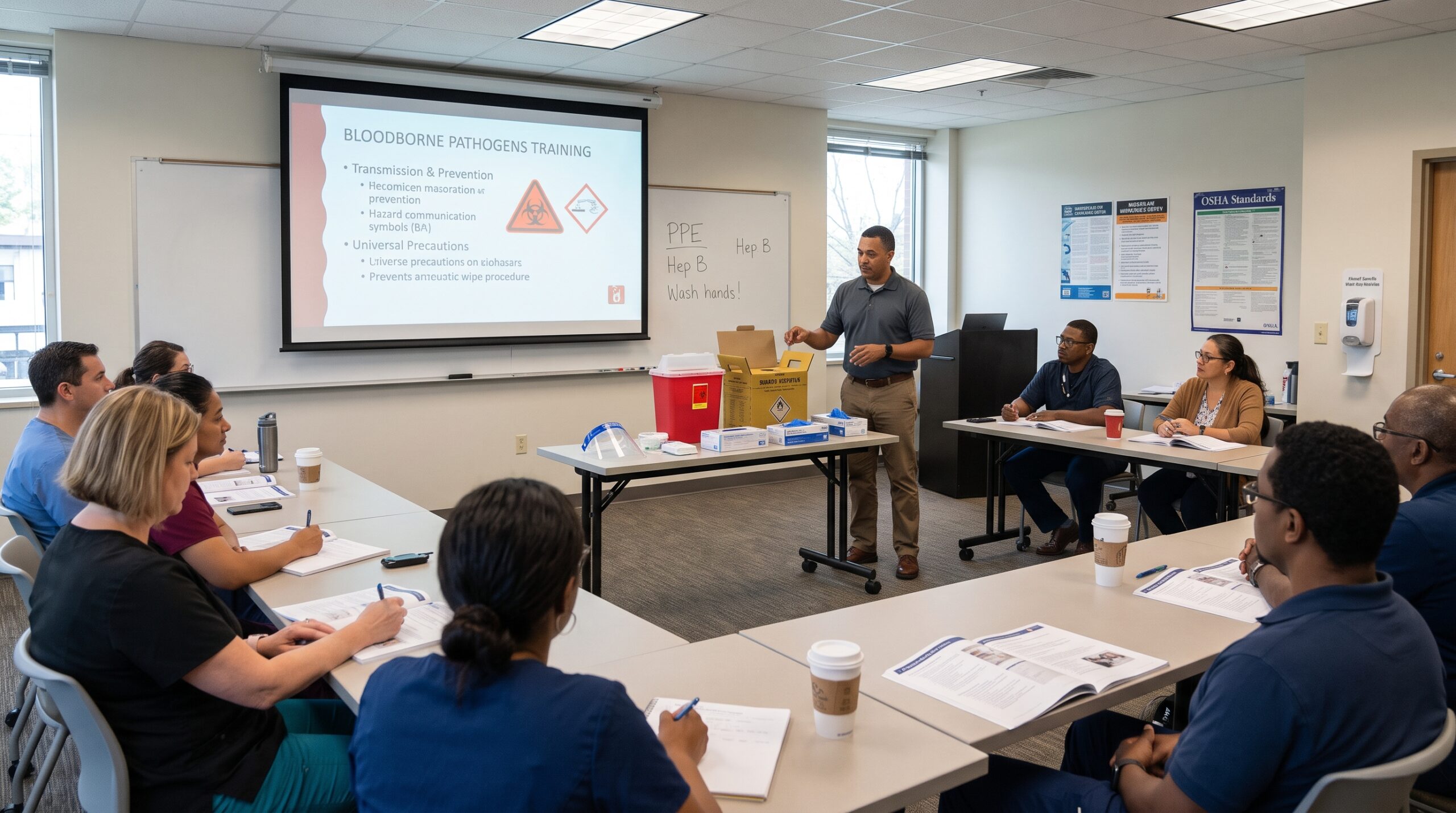
The response to an injury does not necessarily end when the injured person receives assistance. Equipment, work surfaces, or materials may still need attention from employees assigned to cleanup duties.
Fox Valley Safety also offers BBP safety training for Category 2 personnel, including cleanup protocols. Discuss your organization’s job assignments with our team so training addresses the responsibilities of the employees attending.
A useful planning discussion includes:
These questions help move the discussion beyond general awareness and toward the procedures employees need to understand before an incident occurs.
Employees should have room to ask questions that relate to their work. A school employee, a manufacturing first aid responder, and a cleanup team member may need clarification about different responsibilities.
Fox Valley Safety’s training approach combines instructor led presentations, discussion, and workplace examples. Our trainers relate safety information to the work being performed, creating opportunities for participants to address questions during instruction rather than leaving with unresolved concerns.
That interaction also matters under OSHA’s training provisions. Bloodborne pathogens instruction must include relevant workplace information and an opportunity for employees to ask questions of a knowledgeable trainer. A general presentation alone does not address every employer’s specific procedures.
For businesses seeking BBP certification or bloodborne pathogen certification, training completion should be part of a functioning exposure prevention program. Documentation of attendance does not replace the employer’s responsibilities for protective measures, an exposure control plan, and appropriate response procedures.
OSHA 1910.1030 requires training at initial assignment to tasks involving occupational exposure and at least annually thereafter, within one year of the previous session. Additional instruction is required when new or modified tasks affect exposure. Required training must be provided during working hours and at no cost to employees.
For scheduling purposes, review employees’ assignments alongside their previous training dates. Newly assigned responsibilities should prompt a training review rather than simply being added to the next routine class.
Bring the details that make your workplace different: the employees involved, their assigned tasks, your existing exposure control plan, and the questions supervisors are hearing. These details give the training discussion a practical starting point.
Fox Valley Safety serves Wisconsin employers from its Appleton location. Contact our team to discuss bloodborne pathogens training for your workforce and coordinate the support your organization needs.
Employers can connect BBP training with first aid, CPR, and AED training and written safety program support to bring emergency response preparation and workplace procedures into closer alignment.